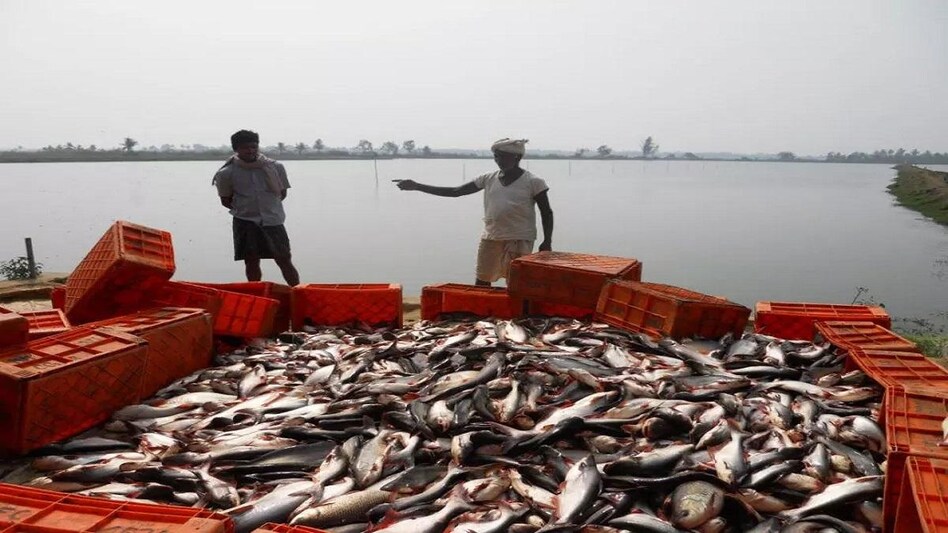
West Bengal has always been one of India’s leading fish-producing states. Fish is not only a major part of Bengali culture and food habits, but also a vital source of livelihood for lakhs of fishermen, fish farmers, traders, transport workers, and small entrepreneurs. Recognising the importance of the fisheries sector, in 2026, the state promised to strengthen and expand the implementation of the PM Matsya Sampada Yojana 2026 across the state. The party also pledged to register all fishermen under the scheme and transform West Bengal into a fisheries export hub.
The PM Matsya Sampada Yojana, launched by the Government of India in 2020, is one of the country’s biggest fisheries development programmes. The scheme aims to modernize fisheries infrastructure, increase fish production, improve fishermen’s income, boost exports, and create employment opportunities. In the context of West Bengal, the scheme holds even greater significance because the state possesses enormous fisheries potential through rivers, ponds, wetlands, reservoirs, coastal areas, and aquaculture systems.
West Bengal places strong emphasis on fisheries modernization, cold storage facilities, deep-sea fishing, export-oriented infrastructure, insurance coverage for fishermen, and direct benefits to fish farmers. The goal is to create a “Sonar Bangla” where fishermen receive better prices, improved facilities, and financial security.
Importance of Fisheries in West Bengal
West Bengal is among the top fish-consuming and fish-producing states in India. Fish farming contributes significantly to the rural economy of districts such as North 24 Parganas, South 24 Parganas, East Midnapore, Howrah, Hooghly, Nadia, Murshidabad, Malda, and Cooch Behar.
Millions of families in the state depend directly or indirectly on fisheries. Traditional fishermen, shrimp farmers, fish traders, hatchery operators, fish transporters, and market vendors all form part of the fisheries ecosystem. Hilsa, Rohu, Katla, Prawn, and Bhetki are especially popular varieties associated with Bengal’s identity.
Despite its strengths, the sector faces several challenges:
- Poor cold chain infrastructure
- Lack of modern fish processing units
- Limited export support
- Frequent cyclones affecting coastal fishermen
- High transportation losses
- Insufficient insurance and financial security
- Dependence on middlemen
- Lack of access to institutional credit
The proper implementation of PM Matsya Sampada Yojana 2026 can solve many of these problems and create new economic opportunities for Bengal’s rural population.
What is PM Matsya Sampada Yojana 2026?
The PM Matsya Sampada Yojana 2026 is a flagship fisheries scheme launched by the Government of India under the Ministry of Fisheries, Animal Husbandry and Dairying.
The main objectives of the scheme include:
- Increasing fish production
- Enhancing fish exports
- Improving income of fishermen and fish farmers
- Reducing post-harvest losses
- Creating fisheries infrastructure
- Encouraging modern aquaculture
- Promoting sustainable fishing practices
- Generating employment in rural and coastal regions
The scheme provides financial assistance and subsidies for various fisheries-related activities such as:
- Fish pond construction
- Biofloc fish farming
- Recirculatory Aquaculture Systems (RAS)
- Fish hatcheries
- Feed mills
- Cold storage units
- Ice plants
- Fish transport vehicles
- Deep-sea fishing vessels
- Ornamental fisheries
- Seaweed cultivation
- Cage culture and reservoir fisheries
Under PMMSY, beneficiaries may receive subsidies ranging from 40% to 60%, especially for women, Scheduled Castes, Scheduled Tribes, and economically weaker sections.
2026 Promise for West Bengal Fisheries:
The 2026 report highlighted fisheries as a major economic sector. The party promised to:
- Register all fishermen under the PM Matsya Sampada Yojana 2026
- Create a fisheries export hub in West Bengal
- Modernize fish markets and transportation
- Improve cold storage and logistics systems
- Strengthen coastal fisheries infrastructure
- Increase financial support to fish farmers
- Expand deep-sea fishing opportunities
- Promote fish processing industries
- Encourage private investment in fisheries
How PMMSY Could Transform West Bengal
1. Increase in Fishermen’s Income
One of the biggest objectives of PM Matsya Sampada Yojana 2026 is to double the income of fishermen and fish farmers. In Bengal, many fishermen still rely on traditional methods that generate limited profits.
With modern equipment, scientific fish farming, better feed management, and cold chain systems, fishermen can sell their products at better prices and reduce losses. This can significantly improve rural incomes.
2. Boost to Fish Exports
West Bengal has huge export potential in shrimp, prawns, frozen fish, and processed seafood products. However, a lack of infrastructure often prevents local producers from entering international markets.
To turn Bengal into a fisheries export hub could attract investments in:
- Export processing zones
- Modern fish packaging units
- International quality testing laboratories
- Refrigerated transport systems
- Coastal export terminals
This could generate large-scale employment opportunities for youth.
3. Employment Generation
The fisheries sector is labour-intensive. Every stage — from breeding and farming to transportation and marketing — creates jobs.
The expansion of PMMSY in Bengal could create employment in:
- Aquaculture farms
- Hatcheries
- Ice factories
- Cold storage chains
- Fish processing plants
- Export companies
- Fisheries startups
- Feed manufacturing units
4. Women Empowerment
Women play a major role in fish vending, drying, sorting, packaging, and retail sales in Bengal. PMMSY provides special subsidies and assistance to women beneficiaries.
Women Self-Help Groups (SHGs) can benefit from:
- Fish drying units
- Value-added fish products
- Fish pickle and packaged food businesses
- Ornamental fisheries
- Small cold storage facilities
This could strengthen women’s economic participation in rural Bengal.
5. Modern Fish Farming Technologies
Traditional fish farming methods often produce lower yields. PM Matsya Sampada Yojana 2026 encourages scientific aquaculture systems such as:
- Biofloc technology
- Cage culture
- Integrated fish farming
- RAS systems
- Digital water quality monitoring
These technologies can increase productivity while using less water and land.
Coastal Development and Disaster Protection
West Bengal’s coastal districts are frequently affected by cyclones such as Amphan and Yaas. Fishermen often lose boats, nets, and livelihoods during natural disasters.
The BJP’s fisheries roadmap emphasizes better infrastructure and financial protection for fishermen. Under PM Matsya Sampada Yojana 2026, fishermen may receive support for:
- Insurance coverage
- Boat modernization
- Safety equipment
- Navigation systems
- Cyclone-resistant infrastructure
Such measures are crucial for sustainable coastal development.
Fisheries and Rural Economy
The rural economy of Bengal depends heavily on agriculture and fisheries. In many villages, fisheries serve as a secondary source of income for farmers.
PM Matsya Sampada Yojana 2026 promotes integrated farming systems where fish farming is combined with:
- Duck farming
- Poultry farming
- Vegetable cultivation
- Paddy farming
This diversification can increase rural income and reduce economic risks for small farmers.
Cold Storage and Supply Chain Modernization
One of the major challenges in Bengal’s fisheries sector is post-harvest loss. A significant quantity of fish gets spoiled during transportation because of inadequate ice facilities and poor cold storage infrastructure.
PMMSY aims to modernize the supply chain through:
- Ice plants
- Refrigerated vans
- Cold chain logistics
- Fish retail kiosks
- Hygienic fish markets
Improved infrastructure can ensure that fishermen receive fair prices while consumers get better quality fish.
Fisheries Startups and Youth Entrepreneurship
Young entrepreneurs in Bengal can benefit greatly from PMMSY. The scheme supports startups in areas such as:
- Ornamental fish breeding
- Fish feed manufacturing
- Aquaculture technology
- Online fish delivery platforms
- Seafood processing businesses
With proper training and financial assistance, the fisheries sector can become a major source of youth employment.
Challenges in Implementation
While PM Matsya Sampada Yojana 2026 has enormous potential, effective implementation remains crucial. Several challenges need to be addressed:
Administrative Delays
Many beneficiaries face delays in approvals, subsidies, and documentation.
Awareness Problems
Several fishermen in rural areas are still unaware of the scheme and its benefits.
Financial Constraints
Small fishermen often struggle to arrange their share of investment even after receiving subsidies.
Infrastructure Gaps
Remote villages lack modern transportation and cold storage systems.
Environmental Concerns
Unregulated aquaculture can create environmental damage if sustainability measures are ignored.
Vision of a Fisheries Export Hub
Bengal’s strategic location near Bangladesh and access to the Bay of Bengal provide huge opportunities for seafood exports.
If implemented successfully, the state could emerge as a major seafood processing and export centre in eastern India.
Potential benefits include:
- Increased foreign exchange earnings
- Industrial investment
- Rural employment growth
- Development of coastal infrastructure
- Better income for fish farmers
Conclusion
The Pradhan Mantri Matsya Sampada Yojana has the potential to transform the fisheries sector in West Bengal. With its rich aquatic resources, long coastline, strong fish consumption culture, and skilled fishing communities, Bengal is naturally suited to become a leading fisheries and seafood export hub.
If implemented effectively, the scheme could generate employment, increase incomes, empower women, strengthen rural economies, and modernize Bengal’s fisheries sector.
However, successful execution will depend on transparent administration, infrastructure development, financial inclusion, environmental sustainability, and strong coordination between the central and state governments.
For millions of fishermen and fish farmers in Bengal, PM Matsya Sampada Yojana 2026 represents not only a welfare programme but also a pathway toward economic security and long-term development.
FAQs:
Q. What is PM Matsya Sampada Yojana?
A. PM Matsya Sampada Yojana 2026 is a central government scheme aimed at developing India’s fisheries sector through infrastructure, subsidies, modernization, and financial support.
Q. What has the BJP promised regarding PMMSY in West Bengal?
A. The BJP promised to register all fishermen under PMMSY and develop West Bengal into a fisheries export hub.
Q. Who can benefit from PMMSY?
A. Fish farmers, traditional fishermen, fish vendors, hatchery operators, women SHGs, entrepreneurs, and aquaculture startups can benefit from the scheme.
Q. What subsidy is available under PMMSY?
A. General beneficiaries may receive up to 40% subsidy, while women, SC, and ST beneficiaries can receive up to 60% subsidy for approved projects.
Q. What types of projects are covered under PMMSY?
A. The scheme supports fish ponds, hatcheries, biofloc farming, cold storage, fish transport vehicles, ornamental fisheries, feed mills, and processing units.
Q. How can fishermen apply for PMMSY?
A. Applications are generally submitted through state fisheries departments, district fisheries offices, or official fisheries portals.
Q. Why is PMMSY important for West Bengal?
A. West Bengal is one of India’s leading fish-producing states, and fisheries support millions of livelihoods across rural and coastal districts.
Q. Will PMMSY create jobs in Bengal?
A. Yes. Expansion of fisheries infrastructure and aquaculture activities can create employment in farming, transportation, processing, and exports.
Q. What is a fisheries export hub?
A. A fisheries export hub is a region with modern infrastructure for seafood processing, storage, packaging, and international exports.
Q. How can women benefit from PMMSY?
A. Women can receive higher subsidies and support for fish processing, retailing, ornamental fisheries, and small fisheries businesses.