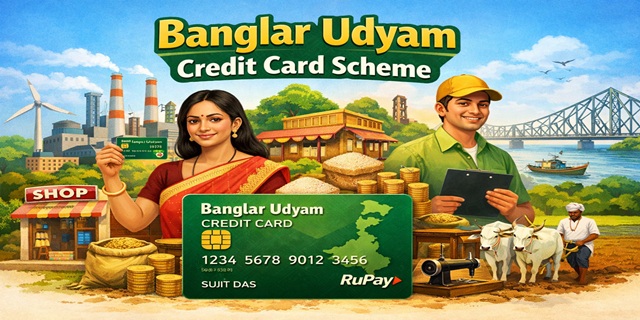
West Bengal has long been known for its entrepreneurial spirit, vibrant small businesses, traditional industries, and growing startup culture. From local traders and artisans to small manufacturers and self-employed youth, lakhs of people across the state depend on micro and small enterprises for their livelihood. However, one of the biggest challenges faced by aspiring entrepreneurs and small business owners in Bengal has always been access to affordable and timely credit.
To address this issue and strengthen the state’s economic foundation, the proposed Banglar Udyam Credit Card Scheme 2026 has emerged as a major financial empowerment initiative aimed at supporting youth, small traders, startups, self-employed individuals, and micro-enterprises across West Bengal. The scheme is designed to provide easy business loans, simplified credit access, and financial assistance for entrepreneurship development.
The objective of the Banglar Udyam Credit Card Scheme 2026 is not only to promote self-employment but also to create jobs, encourage local industries, reduce unemployment, and accelerate economic growth in both urban and rural Bengal. The initiative seeks to build an environment where young entrepreneurs can start businesses without excessive financial burden and existing small enterprises can expand their operations with institutional support.
In a state where small and medium enterprises play a critical role in economic activity, such a credit-based scheme could become an important tool for inclusive development and financial independence.
Importance of Small Businesses in West Bengal
West Bengal has a large informal and small business economy. Thousands of families depend on:
- Grocery shops
- Textile businesses
- Tea stalls
- Small manufacturing units
- Handicrafts
- Fishery businesses
- Poultry farming
- Food processing units
- Transport services
- Mobile repair shops
- Beauty parlours
- Local startups
- Home-based enterprises
These small businesses contribute significantly to employment generation and local economic activity. However, many entrepreneurs struggle because they lack access to formal banking support. Traditional loans often require heavy documentation, collateral security, or high-interest borrowing from informal lenders.
As a result, many talented individuals are unable to expand their businesses or even start new ventures despite having skills and ideas.
The Banglar Udyam Credit Card Scheme 2026 aims to solve these challenges by providing structured and affordable credit support.
What is the Banglar Udyam Credit Card Scheme 2026?
Banglar Udyam Credit Card Scheme 2026 is a proposed financial assistance and entrepreneurship support programme focused on helping small business owners and self-employed individuals in West Bengal.
The scheme is expected to provide:
- Easy access to business loans
- Working capital support
- Low-interest credit facilities
- Financial assistance for startups
- Support for small traders and entrepreneurs
- Digital credit card-based loan access
- Employment-oriented business financing
The programme is designed especially for youth, women entrepreneurs, micro-enterprises, and economically weaker sections who often face difficulties in obtaining bank loans.
The term “Udyam” reflects entrepreneurship and enterprise development. The scheme seeks to encourage people to become job creators instead of depending entirely on government employment opportunities.
Main Objectives of Banglar Udyam Credit Card Scheme 2026
The Banglar Udyam Credit Card Scheme 2026 has several important objectives aimed at strengthening the economic ecosystem of West Bengal.
1. Promote Self-Employment
One of the primary goals is to encourage self-employment among educated and unemployed youth. Instead of waiting for limited government jobs, individuals can establish their own businesses with financial support.
2. Support Small Businesses
Small businesses often face cash flow problems and lack access to affordable loans. The scheme aims to provide working capital and expansion support to micro and small enterprises.
3. Reduce Dependence on Informal Lending
Many traders and entrepreneurs borrow money from local moneylenders at extremely high interest rates. Institutional credit can reduce financial exploitation and improve economic stability.
4. Boost Entrepreneurship Culture
The scheme aims to create a stronger entrepreneurial culture in Bengal by encouraging innovation, startups, and local enterprise development.
5. Create Employment Opportunities
When small businesses grow, they generate employment for others. The expansion of micro-enterprises can help reduce unemployment in both urban and rural areas.
6. Strengthen Rural Economy
Rural entrepreneurs, artisans, farmers, and self-help groups can benefit from easy credit facilities, leading to stronger village-level economic development.
Key Features of Banglar Udyam Credit Card Scheme 2026
Although detailed operational guidelines may depend on official implementation, the proposed scheme is expected to include several important features.
Easy Loan Access
Applicants may receive simplified loan approval processes with minimal paperwork and faster processing times.
Credit Card-Based Financial System
Beneficiaries could receive a dedicated credit card linked to sanctioned business loans. This may allow flexible withdrawal and business-related transactions.
Collateral-Free Loans
For smaller loan amounts, collateral-free financing may be provided to encourage wider participation among low-income entrepreneurs.
Affordable Interest Rates
The scheme may offer loans at subsidized or lower interest rates compared to private borrowing sources.
Support for Women Entrepreneurs
Women-led enterprises and self-help groups may receive priority support and additional financial incentives.
Startup Financing
Young entrepreneurs planning to launch startups or digital businesses may receive dedicated support under the scheme.
Flexible Repayment
Flexible repayment structures could help small business owners manage their finances without excessive burden.
Who Can Benefit from the Scheme?
The Banglar Udyam Credit Card Scheme 2026 is expected to target a wide range of beneficiaries across West Bengal.
Potential beneficiaries may include:
- Unemployed youth
- Small traders
- Shop owners
- Women entrepreneurs
- Self-employed professionals
- Street vendors
- Artisans and craftsmen
- Rural entrepreneurs
- Fish farmers
- Poultry business owners
- Home-based business operators
- Startup founders
- Small manufacturers
- Transport operators
The broad scope of beneficiaries can help create inclusive economic growth across different sectors.
Possible Loan Categories Under the Scheme
The scheme could support different categories of businesses and enterprises.
Retail Businesses
- Grocery stores
- Garment shops
- Electronics stores
- Mobile repair shops
- Hardware shops
Food and Hospitality
- Restaurants
- Tea stalls
- Food delivery businesses
- Catering services
- Sweet shops
Agriculture and Allied Activities
- Fish farming
- Poultry farming
- Dairy businesses
- Floriculture
- Organic farming
Manufacturing Units
- Small factories
- Textile units
- Furniture making
- Plastic manufacturing
- Handicrafts production
Service Sector Businesses
- Beauty parlours
- Cyber cafes
- Coaching centres
- Digital marketing agencies
- Freelance businesses
Focus on Youth Entrepreneurship
One of the most important aspects of the Banglar Udyam Credit Card Scheme 2026 is its focus on youth entrepreneurship.
West Bengal has a large population of educated youth, but unemployment remains a significant concern. Many graduates and diploma holders possess technical skills but lack the capital to start businesses.
The scheme could help young people establish ventures in sectors such as:
- Technology services
- E-commerce
- Food startups
- Logistics
- Digital content creation
- Online education
- Mobile servicing
- Repair businesses
- Tourism and travel services
By encouraging entrepreneurship, the programme aims to shift focus from job-seeking to job creation.
Women Empowerment Through Business Support
Women entrepreneurs are expected to receive major benefits under the scheme. Financial inclusion for women can transform household incomes and strengthen local economies.
Women may receive support for businesses such as:
- Boutique and tailoring units
- Food processing
- Handicrafts
- Beauty services
- Home-based food businesses
- Poultry and dairy farming
- Online businesses
Special incentives and easier access to loans can encourage more women to enter entrepreneurship.
Role in Rural Development
The scheme has the potential to significantly impact rural West Bengal, where access to formal banking and business financing remains limited.
Rural entrepreneurs often struggle due to:
- Lack of capital
- Poor infrastructure
- Limited market access
- Dependence on middlemen
Easy credit support can help villagers establish sustainable businesses and improve economic conditions.
Rural enterprises supported by the scheme may include:
- Fisheries
- Food processing
- Rice mills
- Handloom businesses
- Rural transport services
- Organic farming ventures
This can reduce migration to cities and create local employment opportunities.
Digital and Financial Inclusion
Modern credit systems increasingly depend on digital banking and financial technology. The Banglar Udyam Credit Card Scheme 2026 may promote digital financial inclusion through:
- Online applications
- Digital verification
- UPI-enabled transactions
- Business expense tracking
- Banking integration
- Digital loan management
This could help small entrepreneurs become part of the formal financial ecosystem.
Economic Impact on West Bengal
If implemented effectively, the Banglar Udyam Credit Card Scheme 2026 could generate significant economic benefits for the state.
Increased Business Activity
More businesses mean higher local trade and commercial activity.
Employment Generation
Micro and small enterprises are among the biggest job creators in India.
Higher Tax Revenue
Economic growth and formalization of businesses can increase state revenue.
Reduced Unemployment
Youth entrepreneurship can reduce dependency on government jobs.
Industrial Growth
Small enterprises often evolve into medium-scale industries over time.
Financial Inclusion
Access to institutional banking improves long-term economic stability.
Challenges in Implementation
Like any major financial scheme, the success of the Banglar Udyam Credit Card Scheme 2026 will depend on effective implementation.
Risk of Loan Defaults
Some borrowers may face difficulties in repayment due to business losses or economic slowdown.
Awareness Issues
Many rural entrepreneurs may remain unaware of the scheme unless strong awareness campaigns are conducted.
Banking Delays
Loan approval delays and bureaucratic hurdles could discourage applicants.
Corruption and Middlemen
Transparent systems will be necessary to prevent misuse or favoritism.
Financial Literacy Problems
Some beneficiaries may require training in financial management and business planning.
Need for Skill Development and Training
Credit alone is not enough for successful entrepreneurship. Proper training and skill development are equally important.
The scheme could be strengthened through:
- Entrepreneurship training programmes
- Financial literacy workshops
- Digital business training
- Marketing support
- Startup mentorship
- Business incubation centres
This can improve business success rates and reduce loan defaults.
Potential Sectors for High Growth
Several sectors in West Bengal could particularly benefit from the scheme.
Fisheries and Aquaculture
West Bengal is one of India’s leading fish-producing states.
Tourism
Tourism-related businesses in Darjeeling, Sundarbans, Digha, and Kolkata have strong growth potential.
Textile and Handloom
Traditional Bengali handloom and textile industries can expand through easier financing.
Food Processing
Processed food and packaged goods industries are growing rapidly.
Technology Startups
Urban youth increasingly seek opportunities in technology and digital businesses.
Long-Term Vision for Economic Development
The Banglar Udyam Credit Card Scheme 2026 represents more than just a loan programme. It reflects a broader vision of creating an entrepreneurial economy where individuals can build sustainable livelihoods through innovation and enterprise.
The long-term goals may include:
- Building a startup ecosystem
- Encouraging local manufacturing
- Expanding MSMEs
- Strengthening rural entrepreneurship
- Creating financially independent youth
- Promoting inclusive economic growth
If managed efficiently, the scheme could become one of the key drivers of grassroots economic transformation in West Bengal.
Conclusion:
The Banglar Udyam Credit Card Scheme 2026 has the potential to become a major financial empowerment initiative for the people of West Bengal. By providing easy access to affordable business credit, the scheme aims to support entrepreneurs, small traders, startups, women-led enterprises, and self-employed youth across the state.
In a region where micro and small businesses play a crucial role in the economy, such a programme could create employment, strengthen local industries, improve financial inclusion, and encourage entrepreneurship at every level.
The success of the scheme will depend on transparent implementation, efficient banking support, awareness campaigns, and skill development initiatives. If these factors are properly addressed, the programme could significantly contribute to economic growth and self-reliance in West Bengal.
For many aspiring entrepreneurs, the Banglar Udyam Credit Card Scheme 2026 may become a gateway to financial independence, business expansion, and long-term economic security.
FAQs:
Q. What is the Banglar Udyam Credit Card Scheme 2026?
A. It is a proposed business credit support scheme aimed at helping entrepreneurs, small traders, startups, and self-employed individuals in West Bengal through affordable loans and financial assistance.
Q. Who can apply for the scheme?
A. Potential beneficiaries may include unemployed youth, women entrepreneurs, small traders, shop owners, startups, artisans, and rural business operators.
Q. What type of loans may be provided?
A. The scheme is expected to offer working capital loans, startup financing, business expansion loans, and micro-enterprise credit support.
Q. Will collateral be required?
A. Smaller loan categories may be collateral-free, depending on final implementation guidelines.
Q. Can women entrepreneurs benefit from the scheme?
A. Yes. Women entrepreneurs and self-help groups are expected to receive special support and incentives.
Q. Which sectors may benefit from the scheme?
A. Retail, fisheries, food processing, poultry, textiles, technology startups, manufacturing, transport, and service-sector businesses may benefit.
Q. How can the scheme help unemployed youth?
A. The programme may provide financial assistance for starting businesses, promoting self-employment and entrepreneurship.
Q. Will rural entrepreneurs be included?
A. Yes. Rural businesses and village-level enterprises are expected to be important beneficiaries.
Q. How can applicants apply for the scheme?
A. Applications may be submitted through banks, online portals, or designated government agencies after official launch.
Q. Why is the scheme important for West Bengal?
A. The scheme can strengthen entrepreneurship, improve financial inclusion, create jobs, and support economic growth across urban and rural areas.