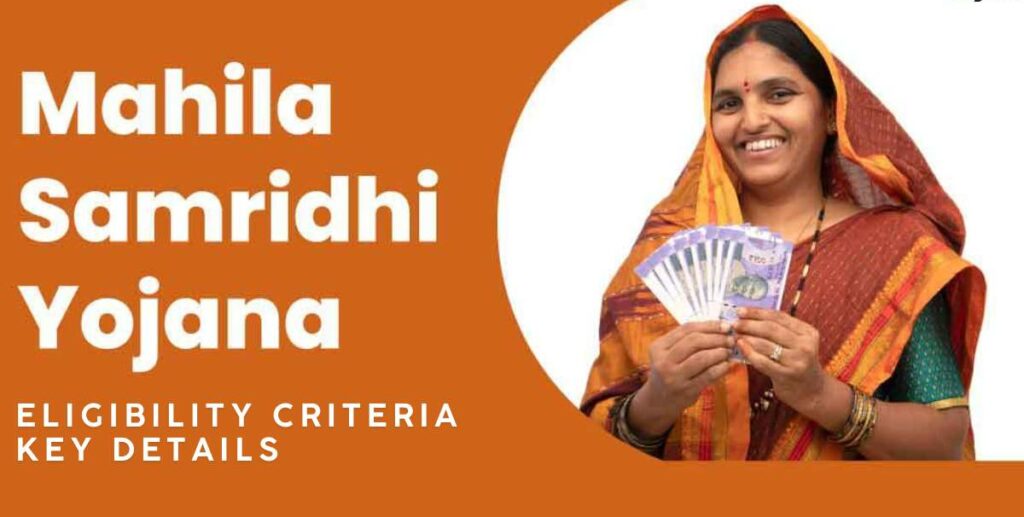
Mahila Samriddhi Yojana 2026 is an important women-centric welfare and financial empowerment initiative aimed at improving the socio-economic condition of women, especially those belonging to economically weaker sections. While similar schemes exist at the national level, state governments, including West Bengal, often adapt or align such programmes with their own welfare models to promote women’s independence, entrepreneurship, and financial inclusion.
In recent years, West Bengal has focused heavily on women-oriented schemes and direct benefit programmes, reflecting a broader policy approach toward social welfare and economic support.
What is Mahila Samriddhi Yojana 2026?
Table of Contents
Mahila Samriddhi Yojana (MSY) is primarily a financial assistance and microfinance scheme designed to support women entrepreneurs and economically disadvantaged women. The scheme provides access to low-interest loans, skill development, and financial support so women can start or expand small businesses.
Although originally introduced at the national level under the Ministry of Social Justice and Empowerment, it is implemented through state agencies and financial institutions, making it relevant for states like West Bengal as well.
In the context of West Bengal, such schemes complement existing welfare initiatives and aim to strengthen grassroots economic participation among women.
Objectives of the Scheme:
The main objective of Mahila Samriddhi Yojana 2026 is to empower women financially and socially. The scheme focuses on reducing dependency, increasing income opportunities, and encouraging entrepreneurship.
Key objectives include:
- Promoting self-employment among women
- Providing financial assistance at low interest rates
- Encouraging small-scale and home-based industries
- Enhancing women’s confidence and decision-making power
- Supporting marginalized communities, including SC/ST/OBC groups
These objectives align with broader national goals of inclusive growth and gender equality.
Key Features of the Scheme:
Financial Assistance:
Under this scheme, women are provided with loans at subsidized or low interest rates. The loan amount can vary but typically supports small business ventures such as tailoring, handicrafts, food processing, and retail activities.
Support Through Self-Help Groups (SHGs):
The scheme often works through Self-Help Groups, which are small groups of women who collectively save and access credit. This approach helps in building financial discipline and community support.
Skill Development and Training:
Beneficiaries may receive training in entrepreneurship, financial literacy, and vocational skills, enabling them to effectively use the funds.
Focus on Marginalized Sections:
The scheme primarily targets women from economically weaker sections and backward communities, ensuring inclusivity and equitable development.
Benefits of Mahila Samriddhi Yojana 2026:
The scheme provides multiple benefits that go beyond financial support:
Economic Empowerment:
Women gain access to capital, allowing them to start businesses and generate income.
Employment Generation:
Small businesses created under the scheme contribute to employment at the local level.
Reduction in Poverty:
By increasing household income, the scheme helps reduce poverty in rural and semi-urban areas.
Social Empowerment:
Financial independence improves women’s status within families and society.
Encouragement of Entrepreneurship:
Women are motivated to become entrepreneurs rather than depend on traditional employment.
Eligibility Criteria:
To apply for Mahila Samriddhi Yojana 2026, applicants generally need to meet the following conditions:
- Must be a woman citizen of India
- Age typically between 18 and 55 years
- Belong to economically weaker sections
- Priority given to SC/ST/OBC categories
- Should have a bank account
- Must be part of a Self-Help Group (in many cases)
These criteria ensure that the benefits reach the most deserving sections of society.
Required Documents:
Applicants are usually required to submit:
- Aadhaar card
- Identity proof
- Address proof
- Income certificate
- Bank account details
- Passport-size photographs
- SHG membership details (if applicable)
These documents help verify eligibility and ensure transparency.
Application Process:
The application process for Mahila Samriddhi Yojana 2026 is generally simple and accessible:
- Visit the local government office, bank, or authorized agency
- Obtain the application form
- Fill in personal and financial details
- Attach required documents
- Submit the form to the concerned authority
- The verification and approval process follows
- Loan or assistance is disbursed upon approval
Some states may also offer online application options.
Role of the West Bengal Government
West Bengal has been known for implementing strong welfare schemes focused on women’s development. While Mahila Samriddhi Yojana is centrally driven, its implementation in the state aligns with existing programmes that provide financial aid and social support to women.
The state government’s focus on direct benefit transfers and women-centric policies enhances the impact of such schemes and ensures better reach at the grassroots level.
Importance of the Scheme:
Mahila Samriddhi Yojana 2026 plays a crucial role in addressing gender inequality and financial exclusion. Many women, especially in rural areas, lack access to formal banking and credit systems. This scheme bridges that gap by providing easy financial access.
It also promotes inclusive growth by ensuring that women from marginalized communities are not left behind in economic development.
Challenges and Limitations:
Despite its benefits, the scheme faces certain challenges:
- Lack of awareness among rural women
- Difficulty in accessing financial institutions
- Delays in loan approval
- Limited training facilities in remote areas
Addressing these challenges is essential for the scheme’s success.
Future Scope:
The future of Mahila Samriddhi Yojana looks promising, especially with increasing focus on digital banking and financial inclusion. With better awareness campaigns and simplified procedures, the scheme can reach more beneficiaries.
Integration with digital platforms, skill training programmes, and entrepreneurship initiatives can further enhance its effectiveness.
Conclusion:
Mahila Samriddhi Yojana 2026 is a significant step toward empowering women economically and socially. By providing financial assistance, skill development, and entrepreneurial opportunities, the scheme helps women become self-reliant and independent.
In states like West Bengal, where welfare schemes play a major role in governance, such initiatives contribute to overall socio-economic development. If implemented effectively, the scheme has the potential to transform the lives of millions of women and promote inclusive growth.
FAQs:
Q. What is Mahila Samriddhi Yojana 2026?
A. It is a government scheme that provides financial assistance and loans to women to help them start or expand small businesses.
Q. Who can apply for this scheme?
A. Women aged 18-55 years from economically weaker sections, especially SC/ST/OBC categories, are eligible.
Q. What kind of financial support is provided?
A. The scheme offers low-interest loans and microfinance support for self-employment and small business activities.
Q. Is the scheme available in West Bengal?
A. Yes, the scheme can be implemented through state agencies and aligns with West Bengal’s women’s welfare initiatives.
Q. What documents are required?
A. Aadhaar card, income certificate, bank details, identity proof, and photographs are commonly required.
Q. How can one apply?
A. Applications can be submitted through local government offices, banks, or authorized agencies, and sometimes online portals.
Q. What is the main objective of the scheme?
A. The main goal is to empower women financially and promote self-employment.
Q. Does the scheme provide training?
A. Yes, in many cases, beneficiaries receive skill development and entrepreneurship training.
Q. What is the loan amount under the scheme?
A. Loan amounts may vary but generally support small-scale business activities.
Q. Why is this scheme important?
A. It promotes women’s empowerment, reduces poverty, and encourages entrepreneurship, contributing to overall economic growth.