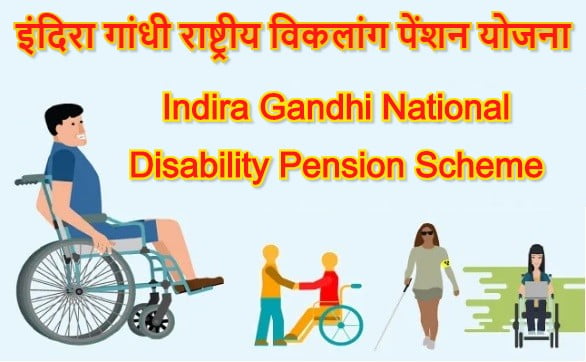
The Indira Gandhi National Disability Pension Scheme (IGNDPS) is a crucial social welfare initiative introduced by the Government of India to provide financial support to persons with severe disabilities. As part of the National Social Assistance Programme (NSAP), this scheme aims to ensure a basic level of income security for economically vulnerable individuals living with disabilities.
Persons with disabilities often face multiple challenges, including limited employment opportunities, healthcare expenses, and social barriers. The IGNDPS plays a vital role in addressing these issues by offering monthly pension assistance, thereby promoting dignity, independence, and social inclusion.
What Is Indira Gandhi National Disability Pension Scheme (IGNDPS)?
Table of Contents
The Indira Gandhi National Disability Pension Scheme (IGNDPS) was launched in 2009 under the umbrella of the National Social Assistance Programme (NSAP).
The primary aim of the scheme is to provide financial assistance to persons with severe disabilities belonging to Below Poverty Line (BPL) households.
The scheme focuses on individuals who are unable to earn a sustainable livelihood due to their disability. By providing a regular monthly pension, IGNDPS ensures that beneficiaries can meet their basic needs such as food, healthcare, and daily living expenses.
Indira Gandhi National Disability Pension Scheme (IGNDPS)
The IGNDPS has been designed with several key objectives:
Financial Security
The scheme ensures a steady source of income for persons with disabilities who have limited earning capacity.
Social Justice and Inclusion
It promotes equal opportunities and inclusion of persons with disabilities in society.
Reduction of Poverty
By targeting BPL households, the scheme helps reduce poverty among disabled individuals.
Enhancing Dignity and Independence
The pension empowers beneficiaries to live with dignity and reduces dependency on others.
Key Features of Indira Gandhi National Disability Pension Scheme (IGNDPS)
The IGNDPS includes several important features that make it a significant welfare scheme:
Monthly Pension Assistance
Eligible beneficiaries receive a monthly pension funded by both the central and state governments.
- Central government contribution: ₹300 per month
- State governments may add additional amounts, increasing total benefits.
Direct Benefit Transfer (DBT)
The pension is directly transferred to the beneficiary’s bank or post office account, ensuring transparency and efficiency.
Nationwide Coverage
The scheme is implemented across all states and union territories, with variations in additional state benefits.
Focus on Severe Disabilities
The scheme specifically targets individuals with 80% or more disability, ensuring support reaches those in greatest need.
Eligibility Criteria Of Indira Gandhi National Disability Pension Scheme (IGNDPS):
To avail benefits under the IGNDPS, applicants must meet the following criteria:
Age Requirement
- Must be between 18 and 79 years
Disability Level
- Must have 80% or more disability certified by a medical authority
Economic Status
- Must belong to a Below Poverty Line (BPL) household
Residency
- Must be a resident of India and the respective state where applying
Exclusion Criteria
- Individuals already receiving similar pension benefits from other schemes may not be eligible.
Pension Amount and Financial Benefits
The pension amount under IGNDPS varies depending on central and state contributions.
5.1 Central Government Contribution
- ₹300 per month for beneficiaries aged 18–79
- ₹500 per month for beneficiaries aged 80 and above
5.2 State Government Contribution
- States provide additional financial support.
- Total pension may range between ₹500 to ₹2,000 or more, depending on the state.
5.3 Mode of Payment
- Direct Benefit Transfer (DBT) to bank/post office accounts.
Benefits of the Indira Gandhi National Disability Pension Scheme (IGNDPS)
The scheme offers multiple benefits:
Financial Stability
Provides a steady income source for individuals who cannot work.
Improved Living Standards
Helps meet basic needs such as food, shelter, and healthcare.
Reduced Dependency
Encourages independence among persons with disabilities.
Social Inclusion
Facilitates participation in community life.
Support for Medical Needs
Helps cover essential medical expenses.
How To Apply For Indira Gandhi National Disability Pension Scheme (IGNDPS):
The application process for IGNDPS can be completed both online and offline.
Online Application Process
- Visit the NSAP or UMANG portal
- Register using a mobile number
- Fill in personal and disability details
- Upload required documents
- Submit the application
Offline Application Process
- Obtain the application form from:
- Gram Panchayat (rural areas)
- Municipality (urban areas)
- Fill in the required details
- Attach necessary documents
- Submit to local authorities for verification
Documents Required For Indira Gandhi National Disability Pension Scheme (IGNDPS)
Applicants must provide:
- Disability certificate
- Income/BPL certificate
- Aadhaar card
- Proof of residence
- Bank account details
- Passport-sized photographs
Implementation Mechanism For Indira Gandhi National Disability Pension Scheme (IGNDPS)
The IGNDPS is implemented through:
- State governments
- District administrations
- Local bodies (Panchayats and Municipalities)
The scheme operates under the National Social Assistance Programme (NSAP), ensuring coordination between central and state authorities.
Role of State Governments:
State governments play a crucial role by:
- Adding financial contributions
- Identifying beneficiaries
- Verifying applications
- Disbursing pensions
In many states, the total pension amount is significantly higher due to additional state support.
Challenges in Implementation:
Despite its benefits, the scheme faces several challenges:
Low Pension Amount
The central contribution of ₹300 is often considered insufficient.
Awareness Issues
Many eligible individuals are unaware of the scheme.
Administrative Delays
Delays in processing applications can affect beneficiaries.
Documentation Barriers
Obtaining disability certificates and BPL status can be difficult.
Regional Disparities
Benefits vary significantly across states.
Government Initiatives for Improvement
The government has taken steps to strengthen the Indira Gandhi National Disability Pension Scheme (IGNDPS):
Digital Platforms
Online portals like UMANG improve accessibility and transparency.
DBT System
Ensures timely and direct payment.
Increased State Contributions
States are encouraged to provide higher pension amounts.
Awareness Campaigns
Efforts are being made to spread awareness about the scheme.
Impact of Indira Gandhi National Disability Pension Scheme (IGNDPS):
The IGNDPS has had a significant impact:
Poverty Reduction
Provides financial relief to vulnerable households.
Empowerment
Enhances independence and confidence among beneficiaries.
Social Security
Acts as a safety net for persons with disabilities.
Economic Participation
Enables beneficiaries to contribute to society.
Case Studies and Real-Life Impact
Across India, the scheme has improved lives:
- Individuals using a pension for medical treatment
- Families relying on a pension for daily expenses
- Beneficiaries achieving financial independence
These examples highlight the scheme’s importance in improving the quality of life.
Future Prospects of Indira Gandhi National Disability Pension Scheme (IGNDPS):
The future of IGNDPS holds several possibilities:
Increased Pension Amount
Demand for higher central contribution is growing.
Better Coverage
Expanding eligibility to include more categories.
Integration with Other Schemes
Combining with healthcare and skill development programs.
Technology Integration
Use of digital tools for efficient implementation.
Comparison with Other Disability Schemes
The IGNDPS differs from other schemes, like:
- State disability pensions
- Assistance to Disabled Persons (ADIP Scheme)
While ADIP focuses on assistive devices, IGNDPS provides direct financial support.
Importance of Indira Gandhi National Disability Pension Scheme (IGNDPS) in Social Welfare
The IGNDPS is a cornerstone of India’s social welfare system. It aligns with the government’s vision of inclusive development and supports the rights of persons with disabilities.
By ensuring financial security, the scheme contributes to a more equitable society.
Conclusion:
The Indira Gandhi National Disability Pension Scheme (IGNDPS) is a vital initiative that provides financial assistance to persons with severe disabilities belonging to economically weaker sections. By offering a steady monthly pension, the scheme ensures dignity, independence, and social inclusion.
While challenges such as low pension amounts and administrative delays persist, ongoing reforms and increased awareness can enhance its effectiveness. The IGNDPS is not just a financial aid program—it is a step toward building an inclusive and compassionate society where every individual has the opportunity to live with dignity.
FAQs
Q. What is IGNDPS?
A. It is a government scheme that provides a monthly pension to persons with severe disabilities from BPL households.
Q. Who is eligible?
A. Individuals aged 18-79 with 80% or more disability and belonging to BPL families.
Q. How much pension is provided?
A. ₹300 per month from the central government, with additional state contributions.
Q. How to apply?
A. Through online portals (UMANG/NSAP) or local government offices.
Q. What is the main objective?
A. To provide financial security and improve the quality of life of persons with disabilities.