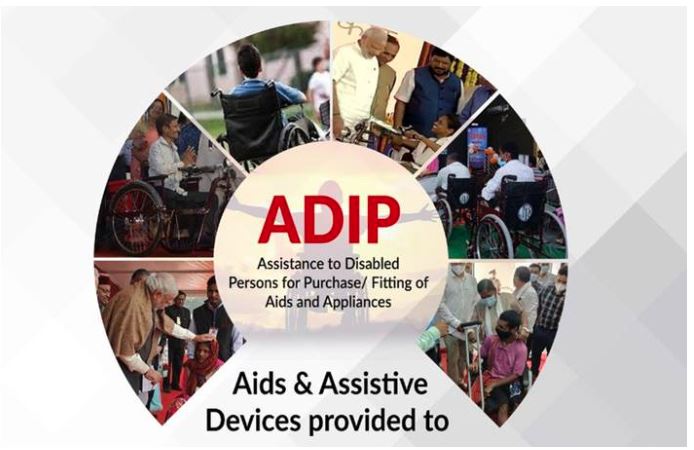
The Assistance to Disabled Persons for Purchase/Fitting of Aids and Appliances (ADIP Scheme) is one of the most significant welfare initiatives launched by the Government of India to support persons with disabilities. The scheme aims to improve the quality of life of individuals with disabilities by providing them with modern, scientifically manufactured, and durable assistive devices.
This article provides a detailed overview of the Assistance to Disabled Persons (ADIP Scheme), including its objectives, features, eligibility criteria, application process, benefits, and overall impact on society.
What is the Assistance to Disabled Persons (ADIP Scheme)?
The Assistance to Disabled Persons (ADIP Scheme) is a flagship initiative implemented by the Department of Empowerment of Persons with Disabilities (DEPwD) under the Ministry of Social Justice and Empowerment, Government of India.
The scheme focuses on assisting economically weaker sections of persons with disabilities by providing them access to assistive devices that can enhance their mobility, communication, and independence.
Disability can significantly affect an individual’s ability to participate fully in society. Lack of access to proper aids and appliances further worsens their situation. The ADIP Scheme addresses this gap by ensuring that assistive devices are made available either free of cost or at subsidized rates.
Objectives of the Assistance to Disabled Persons (ADIP Scheme):
The Assistance to Disabled Persons (ADIP Scheme) has been designed with several key objectives:
Enhancing Mobility and Independence
The scheme aims to empower persons with disabilities by enabling them to move independently and perform daily activities with ease.
Promoting Social Inclusion
By providing assistive devices, the scheme helps individuals integrate into society and participate in education, employment, and community life.
Reducing Economic Burden
Assistive devices can be expensive. The scheme reduces financial strain on families belonging to low-income groups.
Improving Quality of Life
Access to appropriate aids improves physical, psychological, and social well-being.
Key Features of the Assistance to Disabled Persons (ADIP Scheme):
The Assistance to Disabled Persons (ADIP Scheme) stands out due to its inclusive and structured approach. Some of its key features include:
Wide Range of Assistive Devices:
The scheme covers a broad spectrum of aids and appliances, such as:
- Wheelchairs
- Hearing aids
- Artificial limbs
- Crutches and walking sticks
- Braille kits
- Smart canes
- Cochlear implants
Financial Assistance:
Depending on income levels, beneficiaries may receive:
- Free devices
- Subsidized devices
Implementation Through Multiple Agencies:
The scheme is implemented through:
- National Institutes
- Composite Regional Centres (CRCs)
- ALIMCO (Artificial Limbs Manufacturing Corporation of India)
- NGOs and voluntary organizations
Camps for Distribution:
Special camps are organized across rural and urban areas to identify beneficiaries and distribute aid.
Types of Disabilities Covered:
The ADIP Scheme supports individuals with various types of disabilities, including:
- Locomotor disability
- Visual impairment
- Hearing impairment
- Intellectual disabilities
- Multiple disabilities
The scheme ensures inclusivity by covering a wide range of disability categories recognized under Indian law.
Eligibility Criteria For Applying Assistance to Disabled Persons (ADIP Scheme):
To benefit from the ADIP Scheme, applicants must meet specific eligibility conditions:
Indian Citizenship
The applicant must be an Indian citizen.
Disability Certification
A valid disability certificate issued by a competent medical authority is required.
Income Criteria
- Monthly income up to ₹15,000: Eligible for free aids
- Monthly income between ₹15,001 and ₹20,000: Eligible for subsidized aids
No Prior Assistance
The applicant should not have received similar assistance for the same device within a specified period (usually 3–5 years).
Age Criteria
There is no strict age limit, but certain devices may have age-specific guidelines.
Benefits of the Assistance to Disabled Persons (ADIP Scheme):
The scheme offers multiple benefits that significantly improve the lives of persons with disabilities:
Access to Modern Technology
Beneficiaries receive high-quality, advanced assistive devices.
Increased Employment Opportunities
With better mobility and communication tools, individuals can pursue jobs and careers.
Educational Support
Students with disabilities can access tools like Braille kits and hearing aids, enabling better learning outcomes.
Enhanced Social Participation
The scheme reduces barriers to social interaction and community involvement.
Financial Relief
Families are relieved from the high costs of purchasing assistive devices.
How To Apply For Assistance to Disabled Persons (ADIP Scheme)?
Applying for the ADIP Scheme is relatively straightforward. Here’s a step-by-step guide:
Identification of Beneficiaries
Beneficiaries are identified through:
- Camps
- Hospitals
- NGOs
- Government institutions
Submission of Application
Applicants must submit:
- Disability certificate
- Income certificate
- Aadhaar card or ID proof
- Passport-sized photographs
Assessment by Experts
Medical professionals assess the applicant’s needs and recommend suitable devices.
Approval and Sanction
The application is reviewed, and assistance is sanctioned based on eligibility.
Distribution of Aids
Devices are distributed either through camps or directly via implementing agencies.
Role of ALIMCO in the ADIP Scheme:
The Artificial Limbs Manufacturing Corporation of India (ALIMCO) plays a crucial role in the implementation of the scheme.
Manufacturing of Devices
ALIMCO produces high-quality assistive devices at affordable costs.
Research and Development
The organization continuously innovates to improve device quality and functionality.
Distribution Support
ALIMCO actively participates in distribution camps across the country.
ADIP Camps: Bringing Services to the Doorstep:
One of the most effective aspects of the ADIP Scheme is the organization of camps.
Purpose of Camps
- Identify eligible beneficiaries
- Conduct medical assessments
- Distribute assistive devices
Rural Outreach
Camps ensure that even individuals in remote areas can benefit from the scheme.
Awareness Generation
They also spread awareness about disability rights and available support systems.
Challenges in Implementation:
Despite its success, the ADIP Scheme faces certain challenges:
Lack of Awareness
Many eligible individuals are unaware of the scheme.
Accessibility Issues
Remote areas may still face difficulties in accessing services.
Administrative Delays
Processing and distribution can sometimes be delayed.
Maintenance of Devices
Lack of repair and maintenance services can reduce device usability over time.
Government Initiatives to Strengthen the Scheme:
The government has taken several steps to improve the effectiveness of the ADIP Scheme:
Digitalization
Online tracking and application systems are being introduced.
Increased Funding
Budget allocations have been increased to cover more beneficiaries.
Collaboration with NGOs
Partnerships with NGOs help in better outreach and implementation.
Technological Upgradation
Efforts are being made to provide smart and AI-based assistive devices.
Impact of the Assistance to Disabled Persons (ADIP Scheme):
The ADIP Scheme has had a transformative impact on millions of lives:
Empowerment
Individuals gain independence and confidence.
Inclusion
The scheme promotes inclusive development.
Economic Contribution
Beneficiaries can contribute to the economy through employment.
Improved Living Standards
Access to assistive devices significantly enhances daily life.
Case Studies and Success Stories
Many beneficiaries have experienced life-changing improvements:
- Individuals with mobility impairments are gaining independence through wheelchairs
- Students excelling academically with hearing aids and Braille kits
- Workers securing jobs with the help of prosthetic limbs
These success stories highlight the importance and effectiveness of the scheme.
Future Prospects of the Assistance to Disabled Persons (ADIP Scheme)
The future of the Assistance to Disabled Persons (ADIP Scheme) looks promising with advancements in technology and policy support.
Integration of AI and Smart Devices
Future devices may include AI-powered mobility aids and communication tools.
Expansion of Coverage
The scheme may cover more categories of disabilities and devices.
Improved Accessibility
Efforts are being made to ensure last-mile delivery.
Skill Development Integration
Combining assistive support with skill development programs can further empower beneficiaries.
Conclusion:
The Assistance to Disabled Persons (ADIP Scheme) is a vital initiative that reflects the government’s commitment to empowering persons with disabilities. By providing essential aids and appliances, the scheme not only enhances physical capabilities but also promotes dignity, independence, and social inclusion.
While challenges remain, continuous improvements and increased awareness can ensure that the scheme reaches every eligible individual. The ADIP Scheme is not just a welfare program—it is a step toward building an inclusive and equitable society where everyone has the opportunity to thrive.
FAQs:
Q. What is the ADIP Scheme?
A. The ADIP Scheme provides financial assistance to persons with disabilities for purchasing assistive devices.
Q. Who is eligible for the scheme?
A. Indian citizens with certified disabilities and meeting income criteria are eligible.
Q. Are the devices free?
A. Yes, for low-income individuals; others may receive subsidies.
Q. How can I apply?
A. You can apply through camps, NGOs, or authorized government agencies.
Q. What types of devices are provided?
A. Devices include wheelchairs, hearing aids, prosthetics, and more.