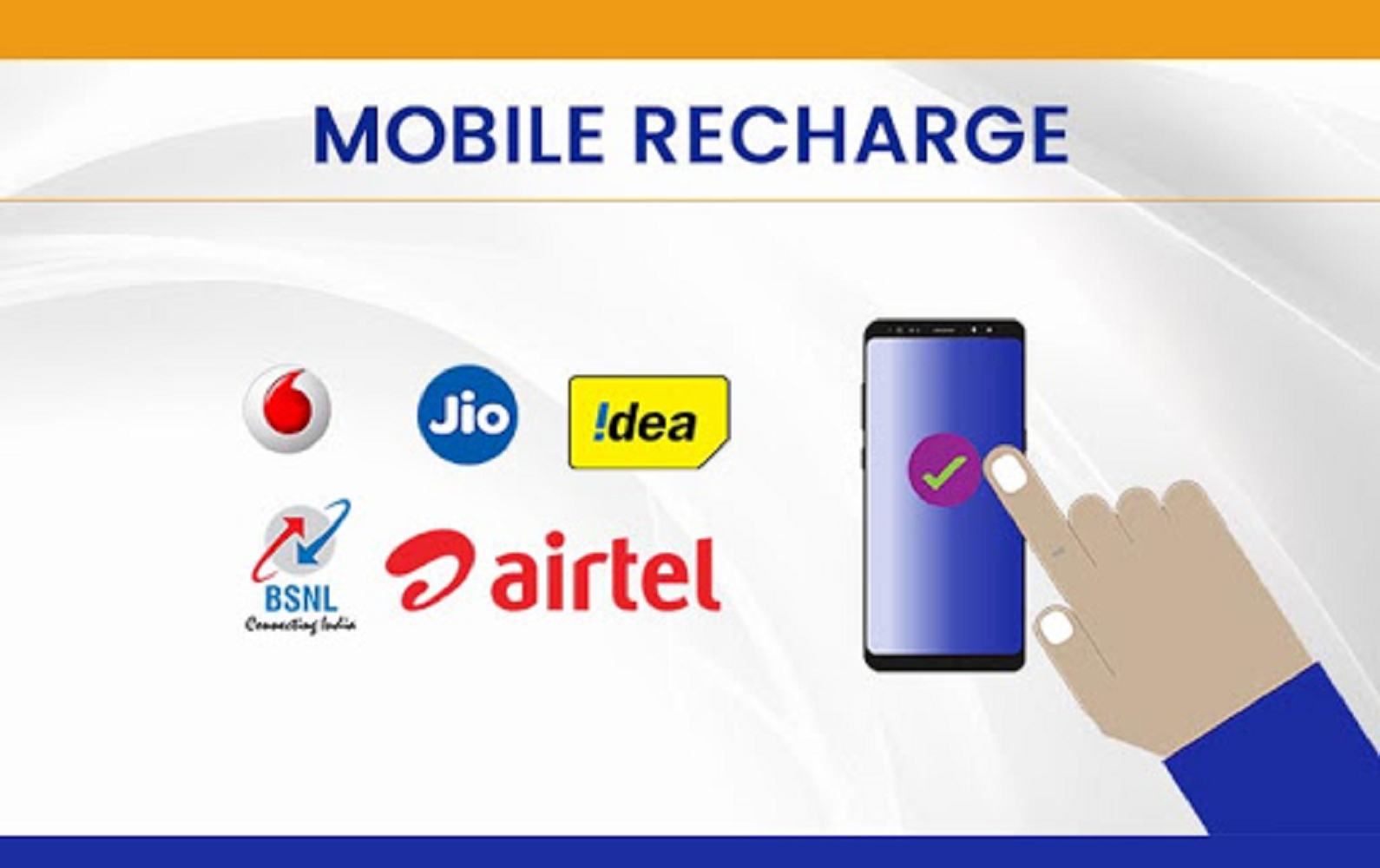

The mobile recharge business continues to be an attractive option for retailers, shopkeepers, digital service providers and individuals looking for an additional income source. A recharge agent can earn a commission whenever a customer completes a mobile, DTH, FASTag or other eligible digital payment transaction through the agent’s platform.
However, one of the most important questions before starting a recharge business is: How much commission does a recharge agent earn in 2026?
This guide explains the Recharge Agent Commission Chart 2026, how commissions work, how to calculate earnings, what affects your margin, and how to choose a recharge platform.
What Is a Recharge Agent Commission?
A recharge agent commission is the amount earned by a retailer or agent for processing a customer’s recharge or digital payment through an authorized recharge platform.
Suppose a customer wants to recharge a mobile number with ₹500. If the applicable retailer commission is 3%, the gross commission would be:
₹500 × 3% = ₹15
The agent may receive this amount immediately, depending on the platform’s settlement system.
The commission is generally not an additional amount that the customer pays to the retailer. Instead, it represents the agent’s margin for facilitating the transaction through the recharge network.
The exact mechanism differs between platforms. Some systems credit the commission instantly to the retailer wallet, while others may use discounts, cashback, incentives, or periodic settlements.
The telecom distribution ecosystem has historically included distributor and retailer commissions as part of the economics of recharge distribution. TRAI documentation also identifies distributor and retailer commission among the costs associated with recharge-voucher distribution.
Recharge Agent Commission Chart 2026:
The following table provides a useful Recharge Agent Commission Chart 2026 reference chart based on currently published retailer commission schedules. These figures should be treated as examples rather than universal telecom-industry rates because commission arrangements can vary by platform.
| Service / Operator | Example Retailer Commission |
|---|---|
| Jio Mobile Recharge | 0.80%–4% |
| Airtel Mobile Recharge | 1.80%–4% |
| Vi Mobile Recharge | 3.30%–4% |
| BSNL Mobile Recharge | 3.50%–6% |
| DTH Recharge | Approximately 2.70%–4%+ |
| FASTag | Platform dependent |
| Postpaid Bill Payment | Often fixed/low margin |
| Electricity Bill Payment | Platform dependent |
| Gas Bill Payment | Platform dependent |
The lower figures in the table are supported by the A1Topup commission schedule, while the higher examples reflect rates advertised by other platforms such as PayinCredit.
A separate industry commission chart from Digital Gramin Seva lists Airtel at 0.90%, Jio at 0.90%, Vi at 2.50%, and BSNL and MTNL at 3.50%, further demonstrating that the same operator can have different retailer margins across different distribution platforms.
Jio Recharge Agent Commission Chart 2026
Jio is one of India’s largest mobile operators, making Jio recharge an important category for recharge retailers.
The commission available to an agent depends heavily on the platform. One current A1Topup retailer chart lists 0.80% for Jio, while Jio’s own JioPOS Lite information says the base margin is 2% and that an introductory additional 2% margin can bring the total to 4% under the stated offer.
This difference illustrates an important point: there is no single Jio recharge commission rate for every agent.
For example, on a ₹1,000 recharge:
- At 0.80% commission = ₹8
- At 2% commission = ₹20
- At 4% commission = ₹40
The JioPOS Lite platform also describes a model in which registered associates add money to a wallet and use that balance to recharge Jio customers.
Airtel Recharge Agent Commission Chart 2026
Airtel recharge is another major category for retailers. A1Topup’s current published retailer schedule lists an Airtel commission of 1.80%.
This means that a ₹1,000 Airtel recharge could produce:
- At 1.80% = ₹18
- At 2.50% = ₹25
- At 4% = ₹40
Consequently, agents should not select a recharge platform merely because it advertises a high headline commission. Check whether the rate applies to all plans, only selected transactions, or promotional periods.
Vi Recharge Agent Commission Chart 2026
Vi, formerly known as Vodafone Idea, can provide attractive margins on some retailer platforms. A1Topup’s August 2026 chart lists 3.30% for Vodafone and Idea.
At a 3.30% commission:
₹500 recharge × 3.30% = ₹16.50
₹1,000 recharge × 3.30% = ₹33
For retailers serving a large number of customers, even a small difference in commission percentage can significantly affect monthly earnings.
BSNL Recharge Agent Commission Chart 2026
BSNL can be particularly interesting for retailers because published commission schedules often show higher margins than those available for some private operators.
A1Topup currently lists 3.50% for BSNL. PayinCredit advertises 6% for BSNL prepaid recharge.
Another 2026 industry article places BSNL recharge commissions in a broad range of approximately 3.5%–6.5%, depending on the provider and transaction arrangement.
At 3.50%:
₹1,000 × 3.50% = ₹35
At 6%:
₹1,000 × 6% = ₹60
Again, the higher figure should not automatically be interpreted as the standard BSNL retailer commission. It is an example of a rate advertised by a particular platform.
DTH Recharge Agent Commission Chart 2026
Recharge agents can often increase their revenue by offering DTH services in addition to mobile recharge.
DTH services can include providers such as:
- Tata Play
- Dish TV
- Airtel Digital TV
- Sun Direct
- Videocon D2H
A1Topup’s published August 2026 chart lists:
- Dish TV: 2.80%
- Airtel Digital TV: 2.80%
- Sun Direct: 3.10%
- Videocon D2H: 2.80%
- Tata Sky/Tata Play: 2.70%
Other recharge platforms advertise different rates. Some industry sources describe DTH commissions broadly in the 3%–7% range, depending on the platform and service.
The important business lesson is that mobile recharge should not necessarily be your only service. A retailer can potentially increase total earnings by combining mobile recharge with DTH, bill payments, and other digital services.
FASTag Recharge Agent Commission Chart 2026
FASTag-related transactions are another service available on some recharge platforms.
The exact remuneration can be substantially lower than mobile or DTH commissions. For example, A1Topup’s current published schedule lists 0.15% for FASTag recharge.
If the commission were 0.15%, a ₹2,000 transaction would generate:
₹2,000 × 0.15% = ₹3
This demonstrates why agents should look at both commission percentage and transaction volume.
How to Calculate Recharge Agent Commission Chart 2026
The basic formula is simple:
Commission = Recharge Amount × Commission Rate ÷ 100
For example, assume:
- Recharge amount = ₹500
- Commission = 3%
Then:
₹500 × 3 ÷ 100 = ₹15
Therefore, the retailer earns ₹15 gross commission.
For a ₹10,000 transaction volume at the same rate:
₹10,000 × 3% = ₹300
And if the retailer processes ₹1 lakh in monthly recharge transactions:
₹1,00,000 × 3% = ₹3,000
At ₹5 lakh monthly volume:
₹5,00,000 × 3% = ₹15,000
At ₹10 lakh monthly volume:
₹10,00,000 × 3% = ₹30,000
These are mathematical examples, not guaranteed income figures. Actual earnings depend on the platform’s rate, successful transaction volume, reversals, taxes, fees, promotional conditions, and operating expenses.
Why Recharge Commission Rates Differ
One of the most common mistakes made by new agents is assuming that every recharge platform offers the same commission.
Several factors influence the rate.
1. Telecom Operator
Different operators have different commercial arrangements with distribution networks. This can result in different margins for Jio, Airtel, Vi and BSNL.
2. Recharge Platform
A retailer using one B2B recharge provider may receive a different rate from a retailer using another provider.
Published examples demonstrate this clearly. A1Topup’s rates differ substantially from PayinCredit’s advertised rates for several operators.
3. Retailer Volume
Some providers may offer incentives or improved commercial terms to higher-volume distributors or retailers.
4. Promotional Offers
A platform may temporarily increase commission as a customer-acquisition or promotional incentive.
5. Product Type
Mobile prepaid, DTH, FASTag, postpaid bills and utility payments may have completely different commission structures.
6. Distribution Hierarchy
Some recharge networks operate through master distributors, distributors and retailers. The available margin may be divided between multiple participants.
Historical telecom documentation also describes a channel structure in which franchisees and retailers share recharge/CTOPUP discounts.
Recharge Agent vs Distributor vs Master Distributor
The recharge ecosystem can contain multiple business levels.
Retailer
The retailer directly serves customers and earns a transaction-level margin.
Distributor
A distributor may manage and support a network of retailers. Their income can include commissions generated from the transactions of their network, depending on the platform.
Master Distributor
A master distributor generally operates at a higher level, potentially managing distributors and larger transaction volumes.
Higher levels may have access to different commercial terms, but they can also involve greater responsibility, customer acquisition costs and operational complexity.
A published 2026 industry overview describes multi-level recharge structures in which master distributors, distributors and retailers can have different commission shares.
For a beginner, starting as a retailer is usually simpler than immediately trying to build a large distribution network.
How to Increase Recharge Agent Earnings in 2026
Offer Multiple Services
Do not rely entirely on prepaid mobile recharge. Adding DTH, FASTag, and bill-payment services can increase the number of transactions handled by your business.
Focus on Customer Retention
A retailer with 200 repeat customers may be more successful than one constantly searching for new customers.
Provide fast service, accurate confirmation, and good support when transactions fail.
Compare Commission Rates
Check several platforms before choosing one.
For example, if Platform A pays 2% and Platform B pays 3%, the difference on ₹5 lakh of monthly transaction volume is:
₹5,00,000 × 1% = ₹5,000
A one-percentage-point difference can therefore become significant at high transaction volumes.
Track Every Rupee
Maintain a daily record of:
- Total recharge volume
- Commission earned
- Failed transactions
- Refunds
- Wallet balance
- Operating expenses
- Net profit
This allows you to understand whether the business is genuinely profitable.
Avoid Competing Only on Commission
A customer may not care whether your backend commission is 2% or 4%. They care about convenience and reliability.
Therefore, focus on service quality rather than simply advertising the highest commission.
Is a Recharge Agent Business Profitable in 2026?
Yes, a recharge agency can be profitable, but profitability depends primarily on transaction volume, commission rates and operating costs.
Mobile recharge is generally a volume-based business.
If the average commission is relatively small, an agent needs a sufficient number of transactions to generate meaningful income.
Recharge Commission vs Profit: What Is the Difference?
This distinction is essential.
Commission is revenue. Profit is what remains after expenses.
Suppose an agent earns ₹20,000 in commissions during a month.
If operating expenses total ₹7,000:
Net operating profit = ₹20,000 − ₹7,000 = ₹13,000
Expenses could include shop rent, internet, electricity, equipment, employee costs and other business expenses.
Therefore, articles or advertisements that quote a monthly “earning” figure should not automatically be interpreted as guaranteed take-home profit.
Recharge Agent Commission Chart 2026 Summary
The Recharge Agent Commission Chart 2026 shows that retailer margins can vary significantly by operator and platform.
The most important lesson is that there is no single official recharge agent commission chart applicable to every retailer in India. Commission rates are determined by the particular operator, distributor, platform, product, and commercial arrangement.
If you are planning to start a recharge business in 2026, compare at least three providers, verify their current commission schedule, understand wallet and settlement rules, check transaction reliability, and calculate your expected earnings using realistic transaction volumes.
FAQs:
Q. What is the average recharge agent commission in 2026?
A. There is no universal average. Published 2026 examples range from below 1% to several percentage points for mobile recharge, depending on the operator and platform. Some platforms advertise higher promotional rates.
Q. Which mobile operator gives the highest recharge commission?
A. It depends on the recharge provider. Current published examples often show BSNL and Vi with higher retailer margins than Jio and Airtel, but individual platforms can offer different rates.
Q. What is the Jio recharge commission in 2026?
A. The rate depends on the platform. A1Topup lists 0.80%, while Jio’s JioPOS Lite information describes a 2% base margin plus an additional 2% introductory margin under its stated offer.
Q. What is the BSNL recharge commission in 2026?
A. Published examples include 3.50% on A1Topup and 6% on PayinCredit. The applicable rate should always be verified with the provider you use.
Q. Is mobile recharge a good side business?
A. It can be useful as an additional service, particularly for an existing shop or digital-service business. The low commission per transaction means that customer volume and repeat business are important.
Q. Are DTH commissions higher than mobile recharge commissions?
A. They can be. Some platforms publish higher DTH margins than mobile recharge margins, although actual rates vary.