
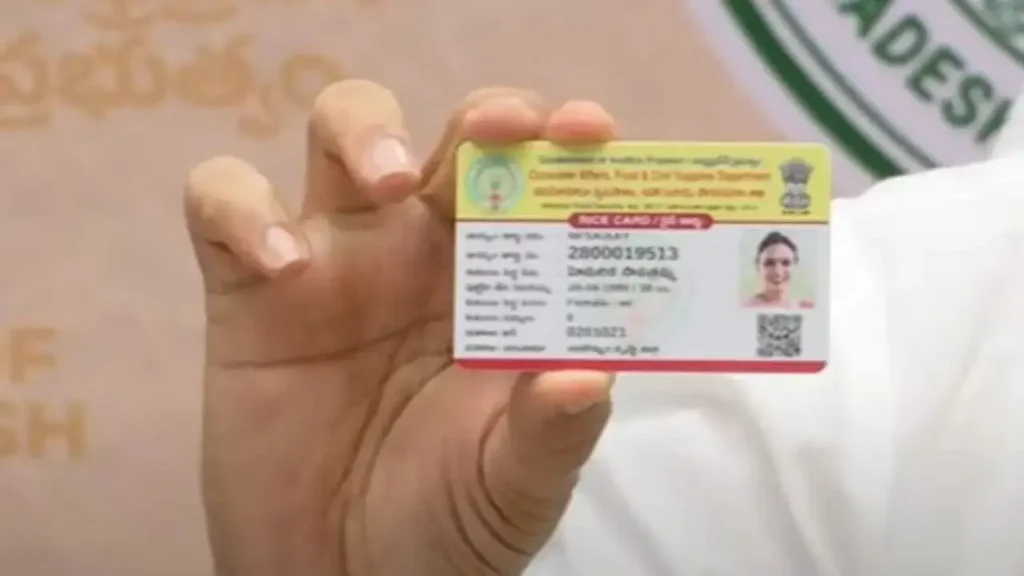
The Andhra Pradesh Ration Card is one of the most important government documents for residents of the state. It enables eligible households to receive subsidized food grains, essential commodities, and access to multiple state and central welfare schemes under the Public Distribution System (PDS).
Issued by the Government of Andhra Pradesh, the ration card also acts as proof of identity, address, and income category, making it mandatory for benefits such as pensions, scholarships, housing schemes, and healthcare programs.
Applicants can apply for the Andhra Pradesh Ration Card online or offline through official state portals.
Official Portal: https://navasakam.ap.gov.in / https://gsws-nbm.ap.gov.in
What is the Andhra Pradesh Ration Card?
Table of Contents
The Andhra Pradesh Ration Card is a government-issued document that allows eligible families to purchase food grains and essentials at subsidized rates through Fair Price Shops (FPS).
The scheme is implemented under the Public Distribution System (PDS) and integrated with YSR welfare schemes for seamless benefit delivery.
Issuing Department
-
Department: Civil Supplies Department, Government of Andhra Pradesh
-
Service Delivery: Village/Ward Secretariat System (GSWS)
Related Portal: AP Civil Supplies / Social Welfare Portal
Types of Ration Cards in Andhra Pradesh
| Ration Card Type | Eligible Category |
|---|---|
| White Ration Card | BPL families |
| Rice Card (YSR Rice Card) | Economically weaker sections |
| Pink Ration Card | Above Poverty Line (APL) |
| Annapurna Card | Senior citizens without income |
Eligibility Criteria For Andhra Pradesh Ration Card
Applicants must meet the following eligibility conditions:
-
Age Requirement
-
Applicant must be 18 years or above
-
-
Residential Requirement
-
Must be a permanent resident of Andhra Pradesh
-
-
Income / BPL Requirement
-
Annual family income:
-
Rural areas: As notified by AP government
-
Urban areas: As per Civil Supplies guidelines
-
-
-
Family Status
-
The applicant’s family should not already possess a ration card in AP
-
-
Special Categories
-
Widows
-
Senior citizens
-
Differently-abled persons
-
Migrant workers (subject to verification)
-
Documents Required For Andhra Pradesh Ration Card
| Document | Purpose |
|---|---|
| Aadhaar Card (All family members) | Identity verification |
| Residence Proof | Address verification |
| Income Certificate (AP) | Income category |
| Caste Certificate (if applicable) | Reservation benefits |
| Electricity Bill / House Tax Receipt | Address proof |
| Passport-size Photograph | Record |
| Mobile Number | OTP & updates |
How to Apply for the Andhra Pradesh Ration Card Online Method
Follow these step-by-step instructions to apply online:
Step 1: Visit the Official Portal
Go to: GSWS / Navasakam Portal
Step 2: Register or Log in
-
Log in usingyour Aadhaar number and OTP
-
Or approach the Village/Ward Secretariat executive for assistance with login
Step 3: Select Ration Card Service
-
Choose New Ration Card Application
-
Select card type (Rice Card / White / Pink)
Step 4: Fill Application Form
-
Enter:
-
Family details
-
Income details
-
Address details
-
Step 5: Upload Documents
-
Upload scanned documents (PDF/JPEG, 200–300 KB recommended)
Step 6: Submit Application
-
Review all details
-
Submit application
-
Save the Application ID for tracking
How to Apply for Andhra Pradesh Ration Card Offline
Applicants without internet access can apply offline.
Offline Application Steps
-
Visit:
-
Village Secretariat (Rural areas)
-
Ward Secretariat (Urban areas)
-
-
Collect Ration Card Application Form
-
Fill the form carefully
-
Attach self-attested document copies
-
Submit to:
-
Village/Ward Secretariat Officer
-
-
Collect Acknowledgment Receipt
Track Application Status
Applicants can track their ration card application status online:
-
Visit: Click Track Application Status
-
Enter:
-
Aadhaar number OR
-
Application ID
-
Status includes:
-
Under Verification
-
Approved
-
Rejected (with reason)
Renewal / Re-Verification Process
-
Is Renewal Required?
-
Ration cards do not require annual renewal
-
Re-verification is done:
-
During family changes
-
Income updates
-
Government surveys
-
-
-
Documents for Re-Verification
-
Aadhaar authentication
-
Updated income certificate
-
Residence proof
-
Common Issues & Solutions
Problem 1: Aadhaar Mismatch
Solution:
Update Aadhaar details via the UIDAI portal and reapply.
Problem 2: Application Rejected
Solution:
Check rejection reason, correct errors, and resubmit.
Problem 3: Document Upload Failure
Solution:
Upload documents in 200–300 KB PDF/JPEG format only.
Problem 4: Name Not Included
Solution:
Apply for family member addition at the Village/Ward Secretariat.
FAQ
Q. How to apply for the Andhra Pradesh Ration Card online?
A. Apply through the GSWS or Navasakam portal using Aadhaar authentication.
Q. Who is eligible for the AP Ration Card?
A. Permanent residents of Andhra Pradesh meeting income criteria.
Q. Is Aadhaar mandatory for AP Ration Card?
A. Yes, Aadhaar is mandatory for all family members.
Q. How long does approval take?
A. Usually, 15–30 working days after verification.
Q. Can I apply offline for the AP Ration Card?
A. Yes, through Village or Ward Secretariat offices.
Q. What is the YSR Rice Card?
A. It is a subsidized ration card for the economically weaker sections.
Q. How to download the AP Ration Card form?
A. Available at the Village/Ward Secretariat or official portals.
Q. Can I add or delete family members later?
A. Yes, through a modification request at the Secretariat.
Q. Is there any application fee?
A. No, the application is completely free.
Q. Where can I check the ration card status?
A. On the official AP GSWS portal using Aadhaar/Application ID.
Conclusion
The Andhra Pradesh Ration Card is a critical document that ensures food security and access to welfare schemes for eligible families. Whether applying online through the GSWS portal or offline via Village/Ward Secretariats, following the correct steps and submitting accurate documents ensures faster approval.
Always check the official Andhra Pradesh government portal for the latest updates, eligibility rules, and notifications.