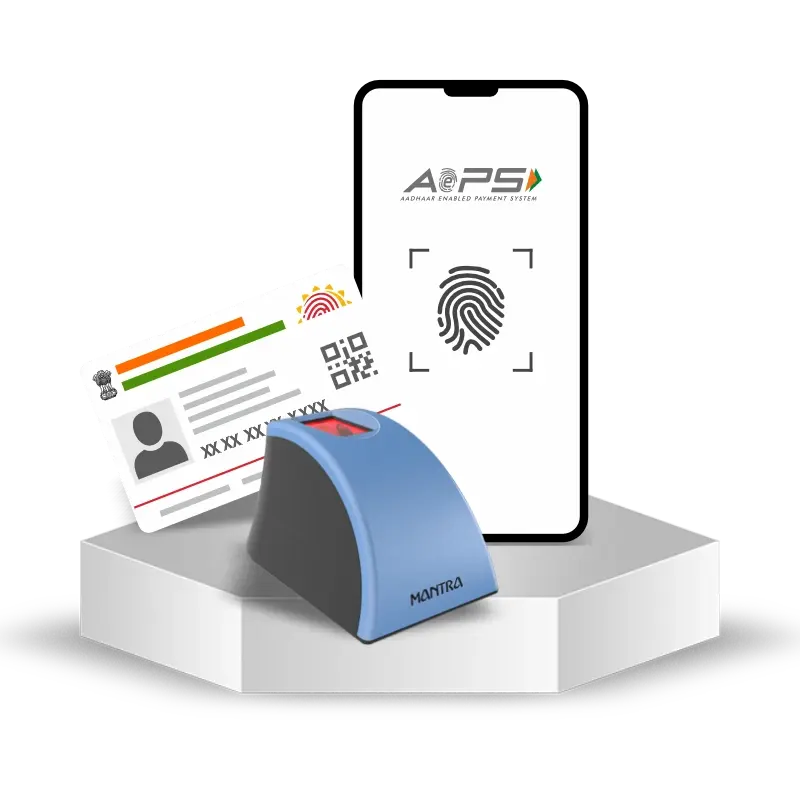
The Aadhaar Enabled Payment System (AEPS) has become one of India’s most popular banking services, enabling customers to withdraw cash, check account balances, obtain mini statements, and perform other banking transactions using their Aadhaar number and biometric authentication. As digital banking continues to expand, AEPS agents such as Banking Correspondents (BCs), CSP operators, retailers, and fintech partners earn commissions for providing these services.
If you’re planning to become an AEPS agent or want to understand your earning potential, this guide covers the latest AEPS Agent Commission Chart 2026, commission structure, eligibility, benefits, and tips to maximize your income.
What is AEPS?
Aadhaar Enabled Payment System (AEPS) is a payment service developed by the National Payments Corporation of India (NPCI). It allows customers to access basic banking services through a micro ATM or biometric device using their Aadhaar number linked to their bank account.
AEPS is especially useful in rural and semi-urban areas where access to traditional banking infrastructure is limited.
Key Features of AEPS
- Cash Withdrawal
- Cash Deposit (supported by participating banks)
- Balance Enquiry
- Mini Statement
- Aadhaar to Aadhaar Fund Transfer (where available)
- Biometric Authentication
- Secure and Paperless Banking
Eligibility to Become an AEPS Agent:
Most providers require applicants to meet basic eligibility conditions, such as:
- Minimum age of 18 years
- Aadhaar Card
- PAN Card
- Active bank account
- Smartphone or computer
- Stable internet connection
- Biometric fingerprint scanner
- Valid address proof
- KYC verification
Additional requirements may vary by provider.
How To Become an AEPS Agent?
Becoming an AEPS (Aadhaar Enabled Payment System) Agent is a great opportunity for retailers, shop owners, CSP operators, and entrepreneurs who want to provide digital banking services and earn commissions. As an AEPS agent, you can offer services such as cash withdrawals, cash deposits (where supported), balance enquiries, mini statements, and fund transfers using Aadhaar-based biometric authentication. AEPS operates through banks and authorized Business Correspondents (BCs) under the NPCI framework.
Step 1: Check Your Eligibility:
Before applying, ensure you meet the basic eligibility requirements. Most AEPS service providers require applicants to:
- Be at least 18 years of age.
- Be an Indian citizen.
- Have a valid Aadhaar Card and PAN Card.
- Maintain an active bank account.
- Own a retail shop or have a place of business (preferred by many providers).
- Complete the required KYC verification.
- The exact eligibility criteria may vary depending on the bank or fintech company.
Step 2: Choose an Authorized AEPS Service Provider
AEPS agents cannot register directly with NPCI. Instead, you must join an authorized bank, Business Correspondent (BC) network, or fintech company that offers AEPS services. Compare providers based on:
- Commission structure
- Settlement time
- Customer support
- Available banking services
- Incentive programs
- Technology and mobile application
- Selecting a reliable provider is important because commission rates and service quality differ between companies.
Step 3: Submit the Required Documents:
During registration, you will generally need to provide:
- Aadhaar Card
- PAN Card
- Passport-size photograph
- Bank passbook or cancelled cheque
- Mobile number
- Email ID
- Address proof
- Shop proof (if applicable)
Your provider may request additional documents depending on its onboarding policy.
Step 4: Complete KYC Verification:
After submitting your application, the provider verifies your identity through the Know Your Customer (KYC) process. This may include document verification, biometric verification, video KYC, or other compliance checks. Banks and AEPS providers are required to follow RBI, UIDAI, and NPCI guidelines before activating an agent account.
Step 5: Purchase a Biometric Device
Since AEPS transactions require biometric authentication, you need a UIDAI/STQC-certified fingerprint scanner compatible with your provider’s software. Many agents also use a Micro ATM or an Android smartphone with the provider’s AEPS application.
Commonly used biometric devices include those from manufacturers approved by the service provider.
Step 6: Install the AEPS Application:
Once your registration is approved, you will receive login credentials for the provider’s AEPS portal or mobile application. Install the software, configure your biometric device, and complete the activation process.
The provider may also offer training on using the application, handling transactions, and resolving customer issues.
Step 7: Start Offering AEPS Services
After activation, you can begin providing banking services such as:
- Cash Withdrawal
- Cash Deposit (where supported)
- Balance Enquiry
- Mini Statement
- Aadhaar-based Fund Transfer (if available)
- Other value-added financial services offered by your provider
Each successful transaction earns you a commission according to your provider’s payout policy.
Factors That Affect AEPS Agent Commission Chart 2026
The commission earned by an AEPS (Aadhaar Enabled Payment System) agent is not fixed and can vary significantly depending on several factors. Banks, Business Correspondent (BC) networks, and fintech companies follow different commission structures based on their business models and service agreements. Understanding these factors can help agents maximize their earnings and choose the right AEPS service provider.
1. Type of Transaction
The commission largely depends on the type of AEPS transaction performed. Cash withdrawal transactions generally offer higher commissions than balance enquiries or mini statement services. Some providers may also offer commissions for cash deposits and Aadhaar-based fund transfers, where these services are available.
2. Transaction Volume
Many AEPS providers reward agents who process a higher number of transactions every month. Agents with consistent transaction volumes may qualify for bonus incentives, higher commission slabs, or special promotional rewards. Increasing customer footfall can therefore directly improve monthly income.
3. Service Provider or BC Network
Different banks and fintech companies have their own commission policies. While one provider may pay a higher commission on cash withdrawals, another may offer better incentives for monthly transaction targets. Comparing commission structures before joining an AEPS provider can help agents earn more.
4. Transaction Amount
Some AEPS providers calculate commissions based on the value of the transaction. Larger withdrawal amounts may generate better commissions than smaller transactions, depending on the provider’s payout policy. However, this varies across service providers.
5. Performance-Based Incentives
Several BC networks and fintech companies run seasonal incentive programs to encourage agents to achieve higher transaction volumes. These incentives may include additional cash rewards, performance bonuses, or special commission rates for meeting monthly or quarterly targets.
6. Customer Base and Location
Agents operating in areas with high customer demand, especially rural and semi-urban regions where ATM access is limited, often process more transactions. A larger customer base naturally results in higher commission earnings over time.
7. Additional Financial Services
Many AEPS agents also offer services such as money transfer, bill payments, mobile recharge, insurance, PAN card services, and FASTag. Although these services have separate commission structures, they increase customer visits and improve overall business income alongside AEPS transactions.
By understanding these factors and maintaining excellent customer service, AEPS agents can significantly increase their monthly earnings while building a sustainable digital banking business.
AEPS Agent Commission Chart 2026
AEPS commissions are not fixed by NPCI. The commission varies depending on the bank, fintech company, BC network, payment service provider, and transaction type. The following table shows typical market ranges; actual payouts differ by provider. See below the AEPS Agent Commission Chart 2026.
| AEPS Service | Typical Commission Range* |
|---|---|
| Cash Withdrawal | ₹3–₹15 per transaction |
| Balance Enquiry | ₹0.50–₹3 |
| Mini Statement | ₹0.50–₹3 |
| Cash Deposit | ₹2–₹10 (where supported) |
| Aadhaar Fund Transfer | Provider-specific |
| Account Opening (if offered) | As per provider policy |
There is no single official AEPS Agent Commission Chart 2026. Commission rates vary across banks and AEPS service providers and may change over time.
Benefits of Becoming an AEPS Agent
Working as an AEPS agent offers several advantages.
1. Regular Income Opportunity
Agents earn commissions on eligible transactions, making AEPS a useful source of recurring income for retailers and CSP operators.
2. More Customer Footfall
Customers visiting your outlet for cash withdrawals or balance enquiries may also purchase other products and services, increasing your overall business revenue.
3. Low Investment
Many providers require only a biometric device, internet connectivity, and basic KYC to get started, making AEPS accessible to small businesses.
4. Cross-Selling Opportunities
AEPS agents can often offer additional services, including:
- Money Transfer
- Mobile & DTH Recharge
- Bill Payments
- PAN Card Services
- Insurance Products
- FASTag
- BBPS Services
5. Serve Rural Communities
AEPS helps provide essential banking services in locations where bank branches or ATMs are not easily accessible, improving financial inclusion.
Conclusion:
The AEPS Agent Commission Chart 2026 helps retailers, Banking Correspondents, CSP operators, and fintech partners understand the earning potential of Aadhaar-enabled banking services. Since AEPS commission rates are determined by individual banks and service providers rather than a single official schedule, choosing the right partner is important. By combining AEPS with other digital financial services and maintaining high transaction volumes, agents can build a reliable and growing source of monthly income.
FAQs:
Q. What is the AEPS Agent Commission in 2026?
A. There is no fixed nationwide AEPS commission. Commission rates vary by bank, BC network, fintech company, and transaction type.
Q. Who pays the AEPS commission?
A. The commission is paid by the bank or AEPS service provider according to its commercial agreement with the agent.
Q. Can I earn a full-time income from AEPS?
A. Many agents use AEPS as a supplementary income source. Those with high transaction volumes and multiple financial services may earn significantly more.
Q. Do I need a biometric device?
A. Yes. A certified biometric fingerprint scanner is generally required for AEPS transactions.
Q. Can a shop owner become an AEPS agent?
A. Yes. Retail shop owners, kirana stores, CSP operators, and Business Correspondents can become AEPS agents after completing the onboarding and KYC process with an authorized provider.